







Quick answer
Growth Demands Structure
Prevent turf wars and rep burnout with a clear map. A smart territory strategy turns undefined geography into a revenue engine. Efficiency drives revenue. When territories are balanced, your team focuses on selling—not traveling or fighting for leads.
The upside
- Clear targets: Directs rep focus to high-value wins, not low-yield chases
- Happier customers: Dedicated reps build deeper, more profitable relationships
- Faster scaling: Launch new markets with a plan, not a guess
- Fair workloads: No one burns out, and no lead is left behind
- Predictable growth: Gain total control over operations to hit your forecast
The Hidden Cost of An
Unstructured Sales Approach
Without defined territories, you lack the visibility to assign reps efficiently or predict revenue.
The friction
- Turf wars: Reps compete for the same leads, causing internal conflict
- Blind spots: High-value markets go ignored while others are oversaturated
- Reactive selling: Strategy vanishes; firefighting takes over
- Customer churn: Accounts get bounced around, damaging relationships
Scale Faster With Sales
Territory Management
Territory management isn't just maintenance, it's a growth engine. Structured maps turn random activity into a scalable system. Intentionality wins. When you replace guesswork with data, you maximize every rep's time and every customer's experience.
1. Target the best, not the easiest
Without guardrails, reps naturally grab low-hanging fruit while high-value prospects collect dust.
The fix: Prioritize impact. Maps force focus on high-potential targets, ensuring your team works strategically rather than reactively.
2. Build trust
Shuffling accounts between reps kills momentum. When customers lack a consistent point of contact, competitors find an opening.
The fix: Deepen roots. Dedicated territories let reps become market experts and build the long-term relationships that drive retention.
3. Scale without chaos
Growth shouldn't break your process. Adding headcount to an unstructured map creates confusion, not coverage.
Speed is currency. A defined territory strategy lets you expand instantly without disrupting current revenue or burning out your best people.
The impact
- Instant onboarding: New hires get a clear patch and quota on Day 1
- Gap-free coverage: Expand into new markets without ignoring existing ones
- Seamless expansion: Slot new reps into the system without rewriting the whole map
Expanding Your Sales Team?
Make sure your territories scale with you
How Territory Management Solves Real Business Challenges
Without structured sales territories, businesses experience ongoing inefficiencies that limit growth. The lack of direction, oversight, and strategic focus leads to missed opportunities, inconsistent performance, and frustrated sales teams.
Here's how businesses struggle without territory management and how a structured approach changes everything:
| The Challenge | Without Territory Management | With a Structured Territory Plan |
|---|---|---|
|
Sales Team Performance |
Reps compete for the same leads or neglect high-value opportunities. Sales efforts feel disorganized. |
Reps have defined areas of focus, reducing overlap and increasing efficiency. |
|
Customer Experience |
Prospects get contacted by multiple reps, leading to confusion and inconsistent service. |
Dedicated account ownership allows reps to build stronger relationships and increase retention. |
|
Expansion & Growth |
New markets are approached haphazardly, leading to inefficient coverage. |
Territories scale alongside the business, ensuring new markets are covered strategically. |
|
Workload Balance |
Some reps are overwhelmed, while others struggle with too few leads. |
Territories are structured based on sales potential, keeping workloads fair and manageable. |
|
Revenue Predictability |
Performance varies by rep, making it difficult to forecast sales and growth. |
Defined territories provide measurable sales data, improving forecasting accuracy. |
Without structured territories, sales efforts feel reactive, meaning businesses constantly chase efficiency instead of building a foundation for growth. A structured sales territory plan eliminates these issues, providing clarity, accountability, and strategic direction for both reps and leadership.
Tech is Key for Sales Territory Management
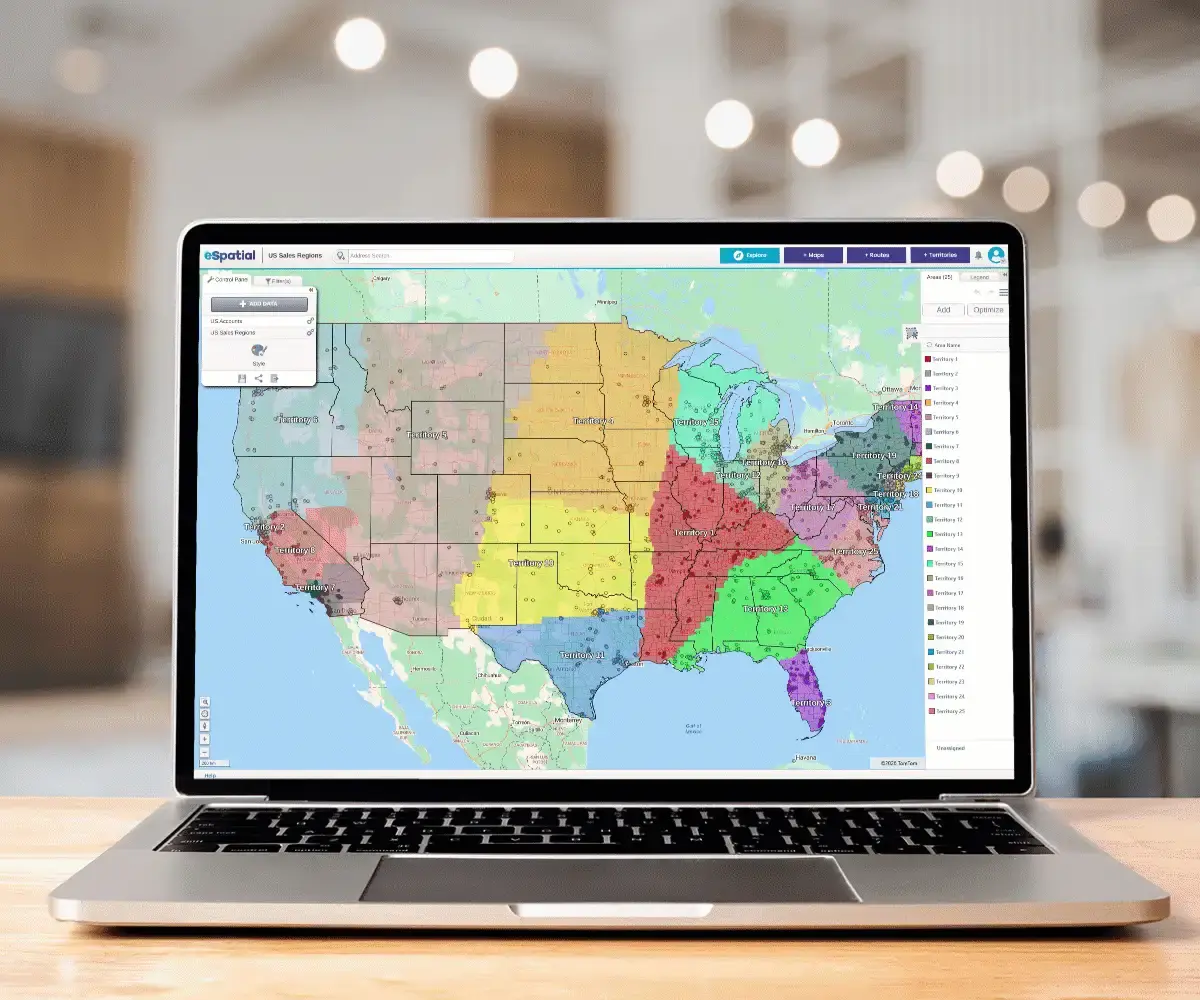
Static maps create blind spots. If you can’t see market changes in real-time, you can’t react to them. Time is money. Manual adjustments take weeks of admin work. eSpatial optimizes your territories in minutes.
How eSpatial Helps Optimize Sales Territories
eSpatial's territory mapping and optimization tools help businesses:
- Visualize demand: Map customer density to focus reps exactly where the money is
- Eliminate gaps: Proactively spot and assign neglected regions before competitors do
- Automate scale: Rebalance workloads and realign territories instantly as you grow

By integrating real-time insights and automation, eSpatial helps businesses stay ahead of market changes and ensure their sales teams are always operating at peak efficiency.
Sales Territory Management Matters
Hard work can't fix a broken map. Without clear territories, teams lose focus and miss targets.
Precision scales. eSpatial turns scattered effort into a disciplined revenue machine.
- Align coverage: Put reps exactly where the revenue is
- Drive performance: Replace gut instinct with data-driven clarity
- Scale smartly: Grow fast without the operational headaches
Don't just manage territories, optimize them
Frequently Asked Questions
Why Do I Need Software? Spreadsheets Work Fine
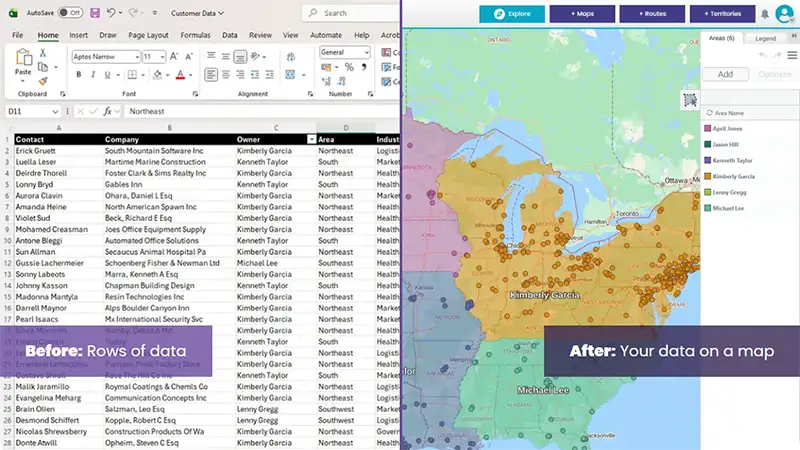
Spreadsheets kill agility. They are static, prone to error, and take weeks to update manually. eSpatial automates the math. You optimize territories in minutes, not months, adapting instantly to market changes.
How Does This Help My Sales Reps?
Fairness fuels performance. When territories are balanced based on workload and potential, reps stop fighting for leads and start hitting quotas.You eliminate "turf wars" and prevent burnout by ensuring no rep is overloaded or starving for deals.
Will This Help Us Grow?
Structure scales. Adding headcount to a broken map creates chaos. eSpatial lets you carve out new patches for new hires instantly. New reps get clear targets on Day 1, without disrupting your existing revenue streams.
What Makes eSpatial Different From a Standard Map?
Insight over image. A standard map just shows you where things are. eSpatial tells you what to do. We identify coverage gaps, prioritize high-value accounts, and use data, not gut instinct, to drive strategy.
Is It Hard to Get Started?
Fast and flexible. You don't need a degree in cartography. Upload your data, visualize your customers, and start optimizing immediately. Try it risk-free: Start your free trial