

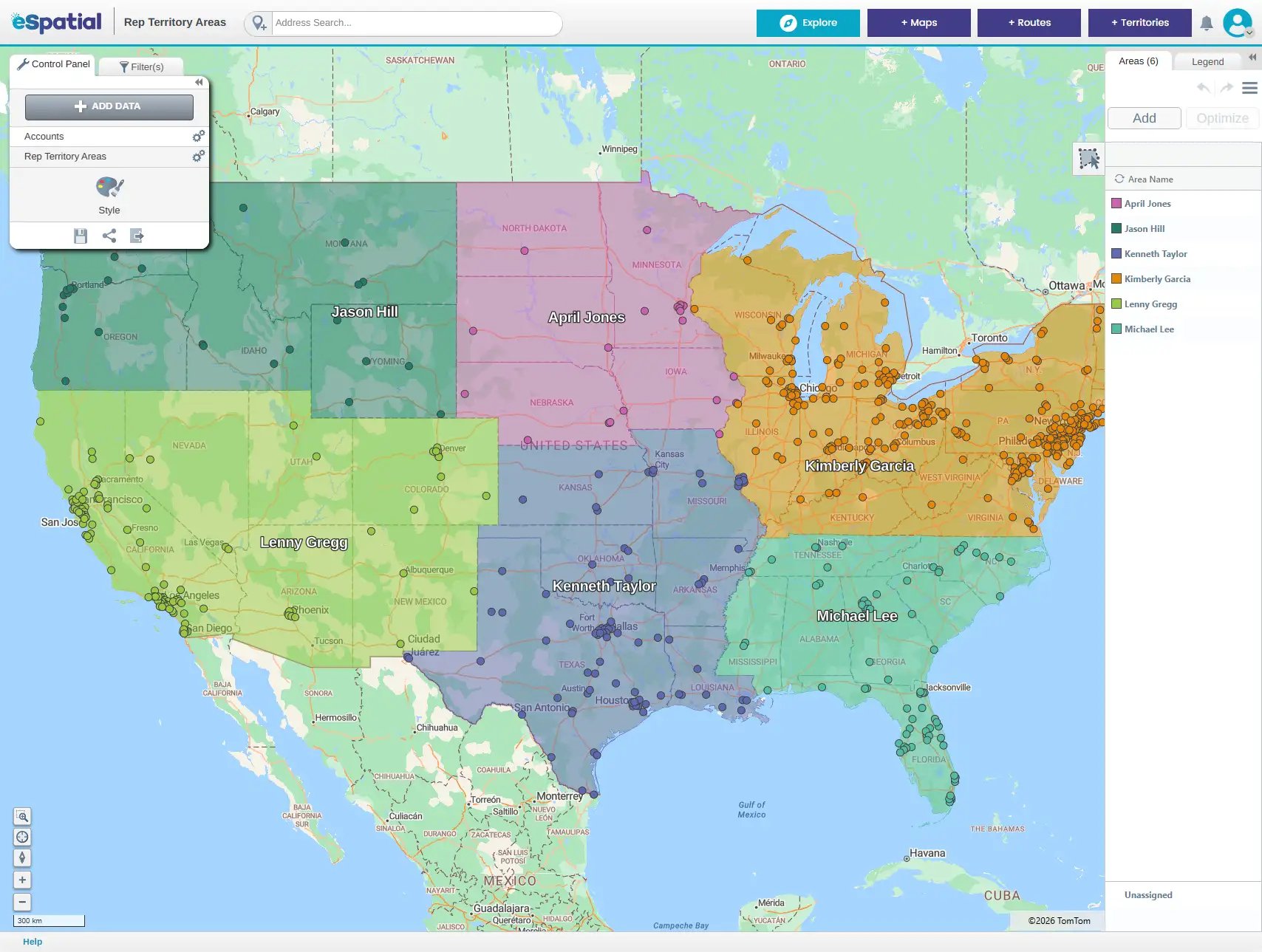






The three core types of sales territory design are Geographic Territories, Account-Based Territories, and Hybrid Territories. Selecting the right methods of designing sales territories depends on your go-to-market structure, sales model (inside vs. outside), and target customer density.
Our Customers Love Mapping With eSpatial
What is Territory Design?

Sales territory design is the strategic process of defining, segmenting, and assigning targeted geographic areas, account lists, or industry verticals to specific sales representatives. The goal of sales territory design is to maximize market coverage, balance rep capacity, and optimize revenue growth while minimizing travel and administrative overhead.
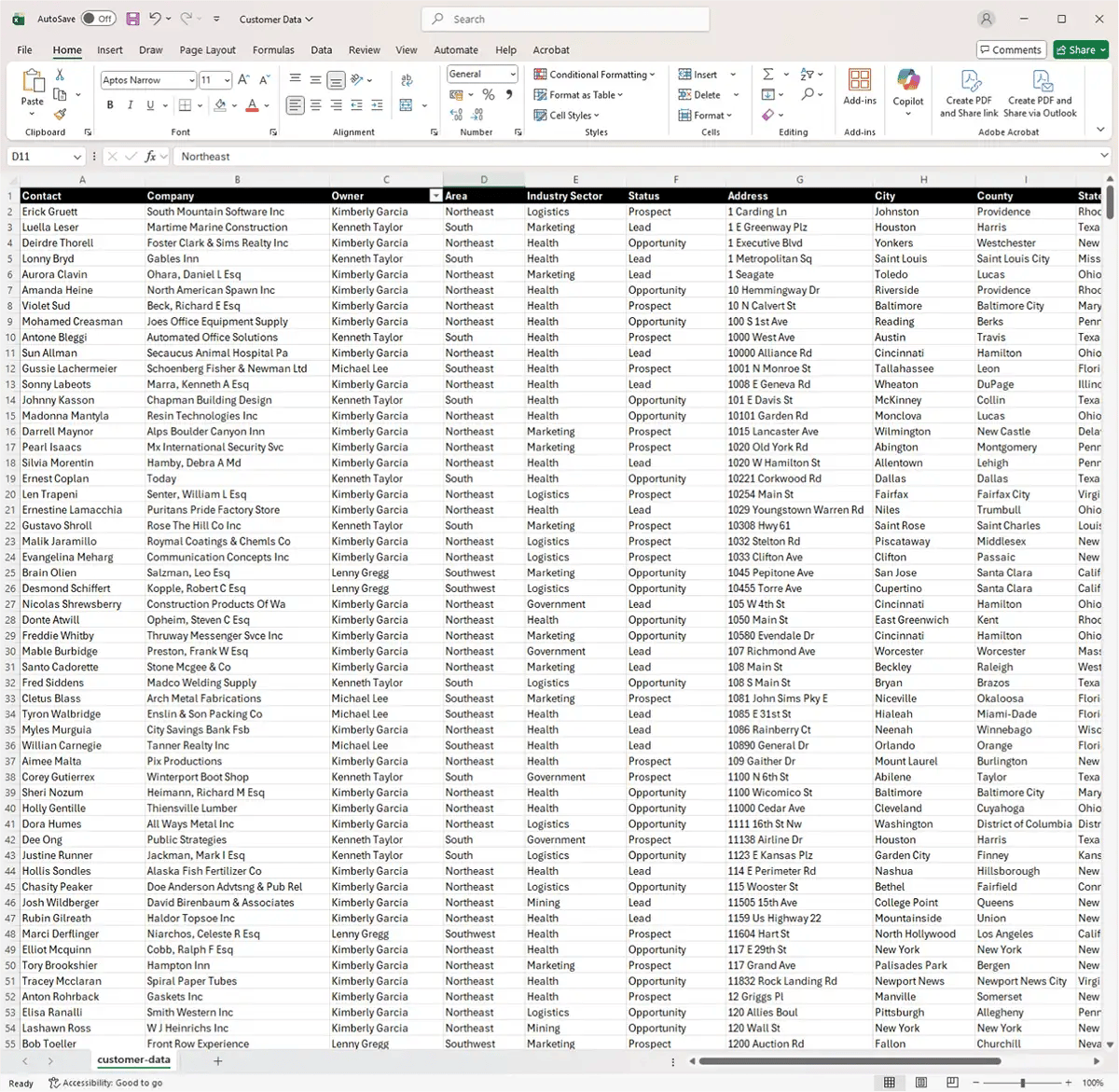
For Sales Operations leaders, sales territory design is the foundation of a scalable revenue machine. When done manually in spreadsheets, you are blind to the most important factors. Drivetime and geography. Rows of ZIP codes fail to account for physical road networks, mountain barriers, or real drivetime realities. Two reps may appear to have identical account loads on a sheet, but on the road one spends three times longer behind the wheel.
When spreadsheets let sales leaders down they can face intense political friction, quota disputes, and delayed market execution. Dynamic territory design transforms regional planning from a weeks-long administrative bottleneck into a strategic growth lever that delivers up to 7% top-line revenue lift. For a deep dive into the technical steps of setting up your map, check out our sales mapping guide.
Types of Sales Territory Design
Geographic Territories
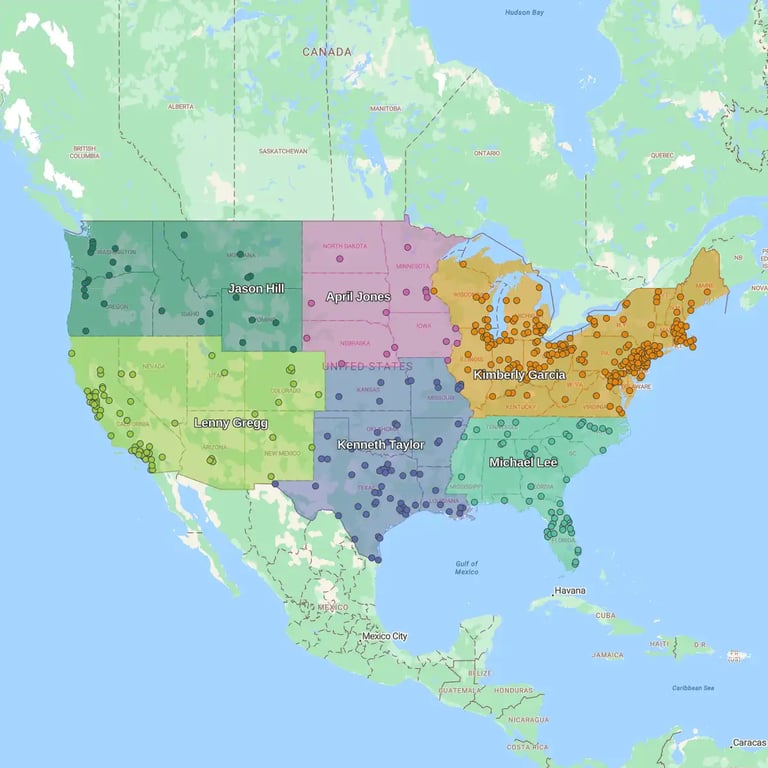
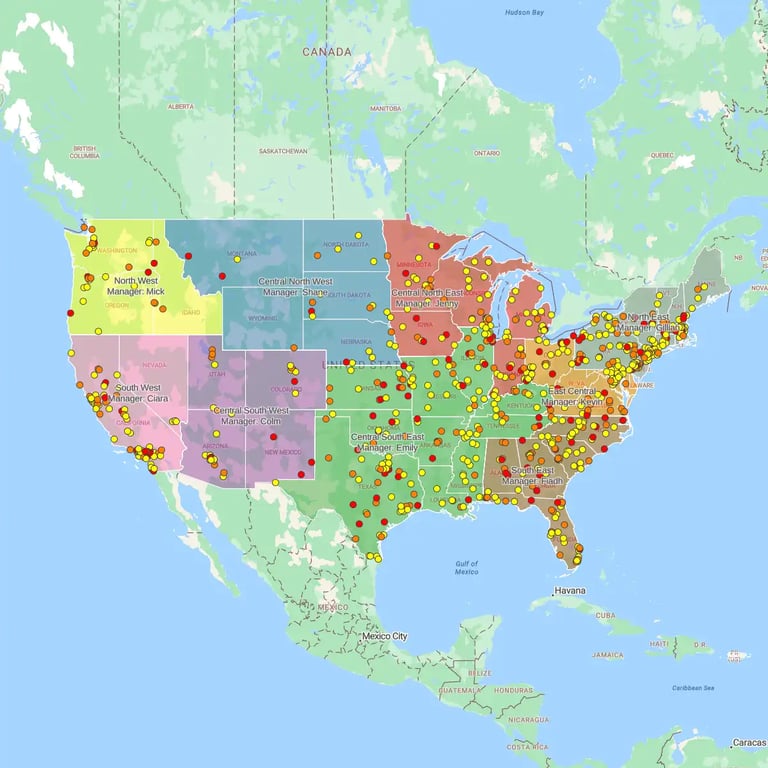
Geographic territory design divides markets using physical boundaries, such as states, counties, postal codes, or Designated Market Areas (DMAs).
- Best For: Field sales teams with heavy in-person travel demands
- Advantage: Minimizes windshield time and travel expenses by keeping reps within compact zones
- Limitation: Raw geography rarely correlates with market opportunity; a large rural boundary may hold a fraction of the pipeline found in a dense metropolitan area
Account-Based Territories
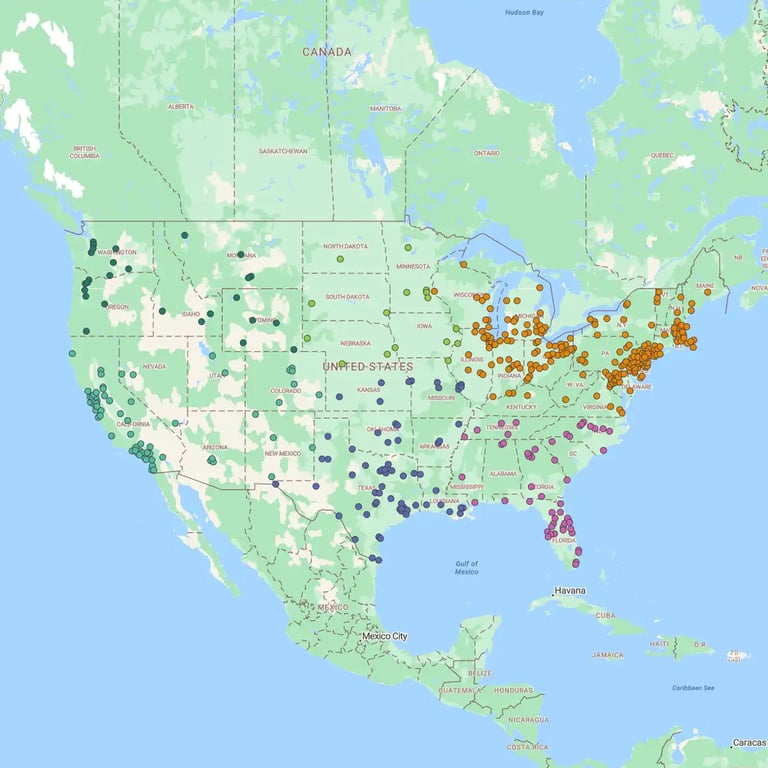
Account-based territory design ignores geographic borders entirely, assigning reps specific lists of high-value accounts based on firmographics, company size, or total addressable market (TAM) potential.
- Best For: Inside sales teams, enterprise key account executives, or highly digital B2B sales models
- Advantage: Ensures key accounts receive dedicated focus regardless of rep locations
- Limitation: Can lead to extreme operational inefficiencies if field reps cross physical paths to visit adjacent buildings
Hybrid Territories
Hybrid territory design combines geographic borders with named account overrides. Field reps own a core physical patch while enterprise key accounts within or outside that border are assigned based on rep expertise or strategic account value.
- Best For: Mid-market and enterprise sales organizations balancing field proximity with named account coverage
Moving Beyond Excel: The eSpatial Advantage
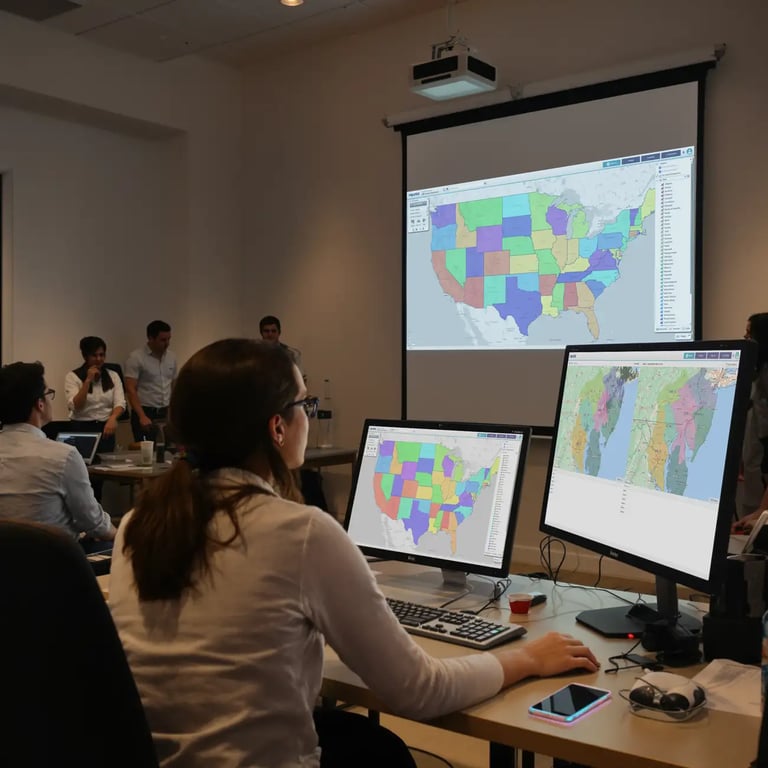
Relying on spreadsheets for sales territory planning leaves your revenue strategy vulnerable to hidden geographic barriers, rep friction, and administrative delays. eSpatial equips Sales Operations and revenue leaders with best-in-class, cloud-based software built specifically for complex territory modeling, optimization, and ongoing alignment:
- Instant Spatial Awareness: Upload spreadsheets or sync Salesforce CRM data to visualize customer distribution, revenue hotspots, and unassigned whitespace immediately
- 6-Level Hierarchy Management: Easily mirror enterprise organizational structures while managing overlay rep patches
- Collaborative Consensus: Conduct live, market-ready alignment sessions to build immediate consensus and protect rep morale
Modern territory design process tools account for drive time and road networks, ensuring that "fair" actually means "doable".
Trusted by Businesses Globally
Join the leaders. Top teams across every industry use location intelligence to turn data into a competitive advantage. Sales: Hunt high-potential leads and balance territories. Operations: Optimise coverage and slash service costs. Marketing: Target high-growth regions and prove ROI.
★★★★★
eSpatial is Awesome
I have been using eSpatial for about a month and find it way more than I expected. Being able to easily utilize the system and visually seeing where incidents occur has helped us utilize resources more efficiently. The Customer Service is excellent.

★★★★☆
eSpatial is a great visual tool for mapping out leads, prospects, and current accounts
I appreciate the visual representation of all of the accounts and being able to connect the accounts with different filters and tools such as heat maps. It is a great organizational tool.
★★★★★
Great tool for creating custom maps and charts
This is a great tool for creating custom heat maps with our data. The CSV import makes it easy to upload and change data, and every point can show different markers. Very helpful for last minute presentations as well!

★★★★☆
Great tool for visualizing territories
We are able to send direct links to end users so they can visualize their areas of responsibility. Making changes to existing territories is very easy.
★★★★★
You must have no doubts, you must try
It is really very functional and effective for situations that require accurate data mapping. I like that I only have a little more than 20 days using it and I already feel like an expert. In addition, I love that I can establish effective data parameters to execute heat maps in a precise and personalized way.
★★★★★
Great Product!
This product is great and super easy to use. This has cut our route design timing in half. The customer service is fantastic!
★★★★★
The support is AMAZING and the tool is simple to use and works well!
The support is amazing. They reply right away every time! I have had two issues that needed resolution within an hour and their support team came through on both times.
★★★★★
Data Visualization Uncovers New Opportunities
The reason we selected and continuously renew our account is the outstanding support we receive each step of the way. eSpatial invests in your success and wants you to be getting the most out of their platform.
★★★★★
eSpatial is a lifesaver!
I have had nothing but success with eSpatial. When previous products were limited in their abilities (map sharing, dynamic maps, etc.).
★★★★☆
Engel & Völkers Americas
At E&V we use this software as a sales tool to show prospects their "territory" first hand. We also are able to create maps using address points to make it easier for our sales team to navigate larger areas of the US to make better use of their time.
★★★☆☆
Easy to use limited in customization
How easy the program is to learn. Easy to import new data.
★★★★☆
Great tool to help our non-profit plan
We appreciate the ability to layer multiple variables at a time.
★★★★★
User Friendly Mapping
I love how easy it was to learn how to map on this software. The set-up was not difficult either and they had a representative reach out personally to help you with your account whether you wanted a phone call or email help.
★★★★★
Great Collaborative platform!
I run a small team that responds to inbound leads with the purpose of qualifying and setting up meetings for our Sales partners. With the higher volume and tight turnaround times we deal with, a collaborative plugin like eSpatial is invaluable.
★★★★★
Bulletproof - Program And People
The program works flawlessly. It's so easy to add data, change the view, isolate territories - total flexibility.
★★★★☆
Excellent Data Visualisation
Ability to customise heat maps and overlay multiple data sets.
★★★★★
Fantastic product and service
This system provides a tremendous insight into our trading locations to allow us to make dynamic decisions. The team and after sales care are in keeping with the systems quality.
★★★★☆
Great program that's simple to use
eSpatial is very user-friendly, allowing us to spend little time implementing and training how to use the software. When we had issues, their excellent customer service was quick to respond.
★★★★★
Most User Friendly Mapping Tool & White Glove Customer Service!
Constant tool enhancements, extremely helpful & quick customer support, user friendly / great UI, easy to upload data, territory balancing option quick to learn / no implementation needed.
★★★★★
eSpatial is Awesome
I have been using eSpatial for about a month and find it way more than I expected. Being able to easily utilize the system and visually seeing where incidents occur has helped us utilize resources more efficiently. The Customer Service is excellent.
★★★★☆
eSpatial is a great visual tool for mapping out leads, prospects, and current accounts
I appreciate the visual representation of all of the accounts and being able to connect the accounts with different filters and tools such as heat maps. It is a great organizational tool.
★★★★★
Great tool for creating custom maps and charts
This is a great tool for creating custom heat maps with our data. The CSV import makes it easy to upload and change data, and every point can show different markers. Very helpful for last minute presentations as well!
★★★★☆
Great tool for visualizing territories
We are able to send direct links to end users so they can visualize their areas of responsibility. Making changes to existing territories is very easy.
★★★★★
You must have no doubts, you must try
It is really very functional and effective for situations that require accurate data mapping. I love that I can establish effective data parameters to execute heat maps in a precise and personalized way.
★★★★★
Great Product!
This product is great and super easy to use. This has cut our route design timing in half. The customer service is fantastic!
★★★★★
The support is AMAZING and the tool is simple to use and works well!
The support is amazing. They reply right away every time! I have had two issues that needed resolution within an hour and their support team came through on both times.
★★★★★
Data Visualization Uncovers New Opportunities
The reason we selected and continuously renew our account is the outstanding support we receive each step of the way. eSpatial invests in your success and wants you to be getting the most out of their platform.
★★★★★
eSpatial is a lifesaver!
eSpatial has set out to crush it from day one. Any improvement that I've suggested has eventually been implemented, and the customer service/support is TOP NOTCH.
★★★★☆
Engel & Völkers Americas
At E&V we use this software as a sales tool to show prospects their "territory" first hand. We also are able to create maps using address points to make it easier for our sales team to navigate larger areas of the US to make better use of their time.
★★★☆☆
Easy to use limited in customization
How easy the program is to learn. Easy to import new data.
★★★★☆
Great tool to help our non-profit plan
We appreciate the ability to layer multiple variables at a time.
★★★★★
User Friendly Mapping
I love how easy it was to learn how to map on this software. The set-up was not difficult either and they had a representative reach out personally to help you with your account whether you wanted a phone call or email help.
★★★★★
Great Collaborative platform!
I run a small team that responds to inbound leads with the purpose of qualifying and setting up meetings for our Sales partners. With the higher volume and tight turnaround times we deal with, a collaborative plugin like eSpatial is invaluable.
★★★★★
Bulletproof - Program And People
The program works flawlessly. It's so easy to add data, change the view, isolate territories - total flexibility.
★★★★☆
Excellent Data Visualisation
Ability to customise heat maps and overlay multiple data sets.
★★★★★
Fantastic product and service
This system provides a tremendous insight into our trading locations to allow us to make dynamic decisions. The team and after sales care are in keeping with the systems quality.
★★★★☆
Great program that's simple to use
eSpatial is very user-friendly, allowing us to spend little time implementing and training how to use the software. When we had issues, their excellent customer service was quick to respond.
★★★★★
Most User Friendly Mapping Tool & White Glove Customer Service!
Constant tool enhancements, extremely helpful & quick customer support, user friendly / great UI, easy to upload data, territory balancing option quick to learn / no implementation needed.
★★★★★
eSpatial is a very easy to use mapping tool for various business needs
Easy to upload data and format maps. Heat maps give us a quick view of our business and the radius and filters help us make business decisions.
★★★★★
eSpatial has been a great partner and their platform helps us in many aspects of sales planning
A great onboarding/training program helps hit the ground running. The dedicated success team is quick to respond, takes feedback, and continues to check in on our needs.
★★★★★
eSpatial is easy to use, maps are visually appealing, and the customer support is fantastic
Any time I have had a question or concern, the support team has responded very quickly and addressed all of my needs with the software.
★★★★☆
Great integration options & helpful support team
The ability to route at a postal code level and layer it among other data.
★★★★★
Wonderful application!
The ease of use and system functionality allow you to generate customized maps.
★★★★☆
Easy to use mapping and territory creator for logistics company
eSpatial is extremely easy to use when it comes to creating maps or territories. We utilize this to keep up with and modify the areas in which we service our customers.
★★★★★
Very Easy and Intuitive
I like the ability to be able to easily plan my routes for my sales calls. It helps me make the most of the time I have and the miles I drive, and allows me to hit my goals more easily than if I were just flying by the seat of my pants.
★★★★★
Great Customer Support
The customer support is fantastic. I wish that every company serviced their customers like eSpatial.
★★★★★
Advancing Your Business Development and Growth
I like best about eSpatial is the ease of the tool and support from the eSpatial team.
★★★☆☆
Use eSpatial for simple policy mapping
Updates to maps in my eSpatial account automatically sync to the webpages where I have them linked.
★★★★★
Mapping
The ability to slice a data set into different maps and share them with non-licensed users.
★★★★☆
Good Mapping System for Corporate Customers
I like the user interface and how you can manipulate the layers and appearances of the maps.
★★★★★
Great Out of The Box UI and Fantastic Customer Support
Easy to map and design territories; clean UI.
★★★★★
Great product
Excellent reaction time, accuracy, customer service.
★★★★★
eSpatial Was Definitely the Right Choice for my Company
User-friendly, powerful, visually attractive, accurate, with robust data integration.
★★★★★
Amazing Product. Otherwordly Support
I use eSpatial to plot sales by zip codes for retailers and their competitors. The mapping helps me to better focus digital advertising, decide y/n on cable zones, and to measure effectiveness of changes in media plans. Clients love it, because . . . well, the map has life. A spreadsheet does not.
★★★★☆
There was a change in the website design but I preferred the old one
Something that is good about eSpatial is for planning proximity purposes, it is a good tool.
★★★★★
A Great Tool for Mapping Customers and for Marketing
The ease of use. The platform makes uploading data and mapping extremely easy. This is not limited to just customer data.
★★★★★
Strategic Mapping of College Sports Fans
Visualizing the data through heat maps or radius maps allows me to tell a positive story that is easy to comprehend.
★★★★★
eSpatial is a very easy to use mapping tool for various business needs
Easy to upload data and format maps. Heat maps give us a quick view of our business and the radius and filters help us make business decisions.
★★★★★
eSpatial has been a great partner and their platform helps us in many aspects of sales planning
A great onboarding/training program helps hit the ground running. The dedicated success team is quick to respond, takes feedback, and continues to check in on our needs.
★★★★★
eSpatial is easy to use, maps are visually appealing, and the customer support is fantastic
Any time I have had a question or concern, the support team has responded very quickly and addressed all of my needs with the software.
★★★★☆
Great integration options & helpful support team
The ability to route at a postal code level and layer it among other data.
★★★★★
Wonderful application!
The ease of use and system functionality allow you to generate customized maps.
★★★★☆
Easy to use mapping and territory creator for logistics company
eSpatial is extremely easy to use when it comes to creating maps or territories. We utilize this to keep up with and modify the areas in which we service our customers.
★★★★★
Very Easy and Intuitive
I like the ability to be able to easily plan my routes for my sales calls. It helps me make the most of the time I have and the miles I drive, and allows me to hit my goals more easily than if I were just flying by the seat of my pants.
★★★★★
Great Customer Support
They ask the right questions to get an understanding of what you need to accomplish with the software. Their overall knowledge of the practical way to use the software of the software is phenomenal.
★★★★★
Advancing Your Business Development and Growth
I like best about eSpatial is the ease of the tool and support from the eSpatial team.
★★★☆☆
Use eSpatial for simple policy mapping
Updates to maps in my eSpatial account automatically sync to the webpages where I have them linked.
★★★★★
Mapping
The ability to slice a data set into different maps and share them with non-licensed users.
★★★★☆
Good Mapping System for Corporate Customers
I like the user interface and how you can manipulate the layers and appearances of the maps.
★★★★★
Great Out of The Box UI and Fantastic Customer Support
Easy to map and design territories; clean UI.
★★★★★
Great product
Excellent reaction time, accuracy, customer service.
★★★★★
eSpatial Was Definitely the Right Choice for my Company
User-friendly, powerful, visually attractive, accurate, with robust data integration.
★★★★★
Amazing Product. Otherwordly Support
I use eSpatial to plot sales by zip codes for retailers and their competitors. The mapping helps me to better focus digital advertising, decide y/n on cable zones, and to measure effectiveness of changes in media plans. Clients love it, because . . . well, the map has life. A spreadsheet does not.
★★★★☆
There was a change in the website design but I preferred the old one
Something that is good about eSpatial is for planning proximity purposes, it is a good tool.
★★★★★
A Great Tool for Mapping Customers and for Marketing
The ease of use. The platform makes uploading data and mapping extremely easy. This is not limited to just customer data.
★★★★★
Strategic Mapping of College Sports Fans
Visualizing the data through heat maps or radius maps allows me to tell a positive story that is easy to comprehend.
Territory Mapping Solutions
-
 Optimization & Balancing
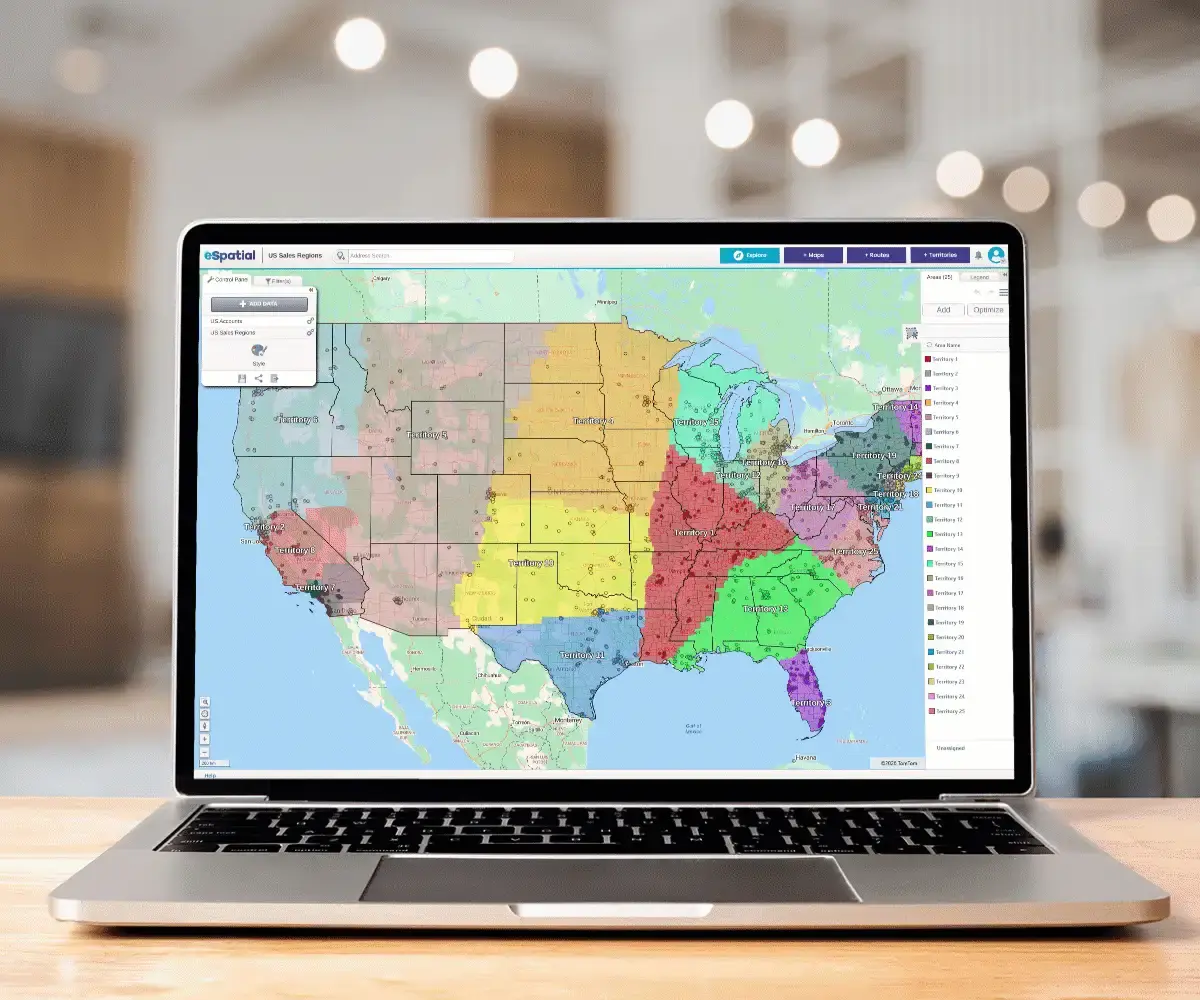
Shift from "equal" to "equitable" territories. Use workload-based optimization to prevent rep burnout and eliminate lost revenue from unserviced accounts. Balance hundreds of territories in minutes to ensure every rep has a fair path to quota.
-
 Growth & Realignment
Markets evolve, your maps should too. Master active territory management by responding to personnel shifts and performance outliers in real-time. Protect your revenue from "territory drift" and scale your footprint with agile, data-backed realignment.