






4.8/5 of 53 reviews
4.3/5 of 38 reviews

Multi-Stop Route Planner for Sales Teams: How Do You Turn Windshield Time into Closed Deals


Consumer apps cap routes at 10 stops, prioritizing proximity over revenue. Upgrading to a CRM integrated multi-stop planner shifts operations toward value-driven selling.

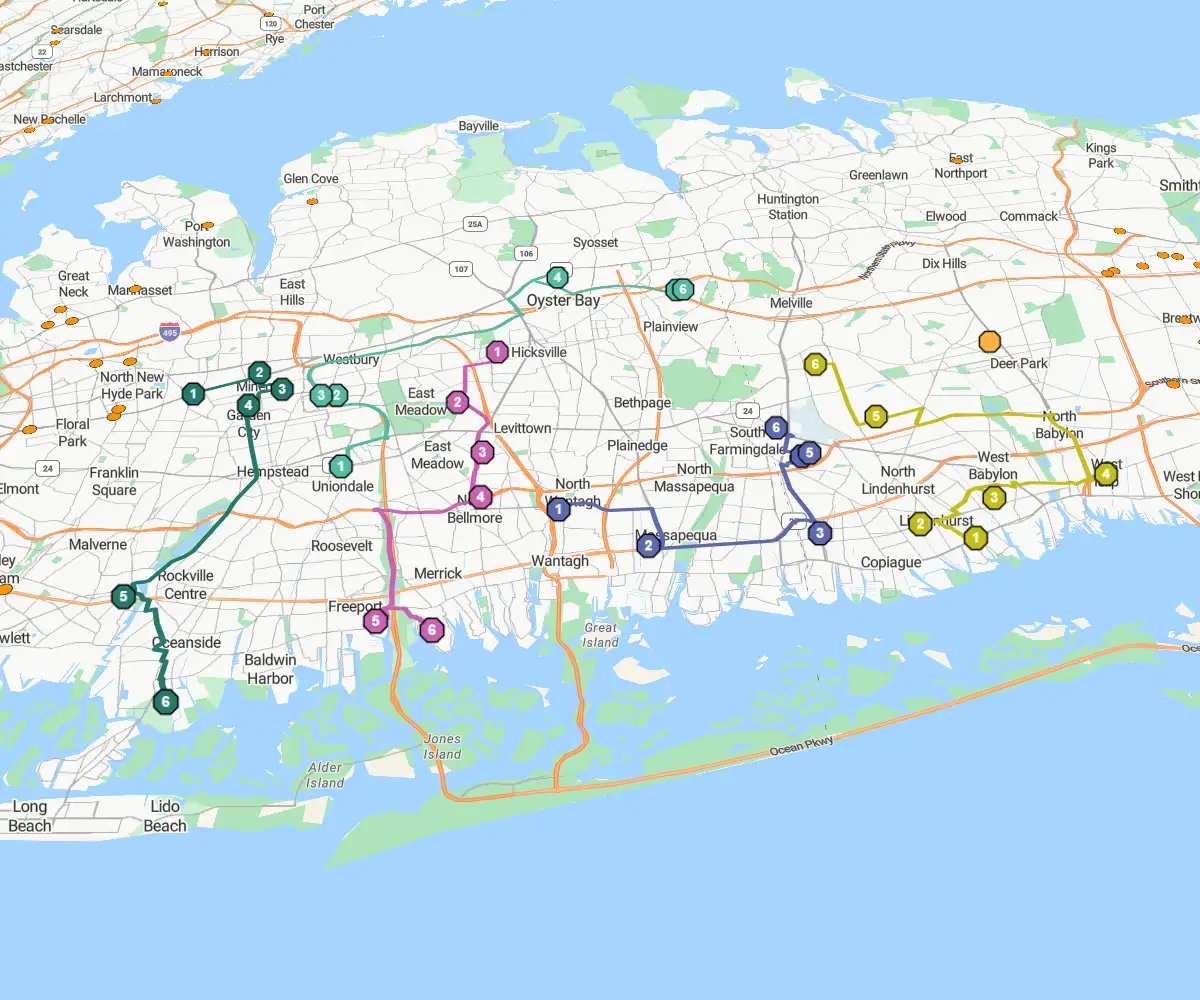
Oyster Bay route map

Our Customers Love Mapping With eSpatial
  • RE/MAX logo
  • FedEx logo
  • Volvo logo
  • LG Electronics logo
  • Henkel Corporation logo
  • Continental Tire logo

What Is a Multi-Stop Route Planner and
How Does It Drive Sales Efficiency?


A multi-stop route planner is specialized software that calculates the most efficient travel sequence across multiple customer locations in a single journey. Unlike standard navigation apps, it automatically sequences stops based on account priority, travel constraints, and appointment windows to minimize drive time and maximize daily selling calls.

Why Is Google Maps Costing Your Sales
Team Two Meetings Every Day


Consumer navigation tools like Google Maps are built for simple point-A to point-B driving, not complex sales territory coverage. Because Google Maps enforces a hard limit of 10 stops per route, field reps conducting over 10 daily calls are forced to juggle multiple split maps. Furthermore, consumer apps calculate navigation based on the sequence you enter addresses, they do not automatically solve multi-destination loop optimization. If stop 8 is physically next door to stop 2, consumer tools will still route your rep back across town later in the day.

This ad-hoc, "gut-feel" planning wastes 45 to 60 minutes of daily windshield time in needless backtracking. Over a full sales week, that lost travel time costs your reps roughly two high-value customer meetings every single day. Multi-stop route planners like eSpatial eliminate this bottleneck by automatically organizing bulk customer addresses into streamlined daily paths, allowing reps to make more calls while driving fewer miles.

How Does Proximity-Based Routing
Differ From Value-Based Routing?


Basic GPS routing uses proximity-based logic, directing sales reps to whatever pin is physically closest on the map. While proximity routing minimizes immediate distance between two points, it often directs reps to cold prospects or low-tier accounts while $50,000 revenue opportunities sit unvisited three miles away.

Value-based routing combines spatial proximity with account intelligence. eSpatial evaluates account priority, deal stage, and scheduled time windows (it has a recommendations engine) alongside travel distance to sequence stops by revenue potential.

Routing Strategy

Proximity-Based Routing (Basic GPS)

Value-Based Routing (eSpatial Multi-Stop Planner)

Primary Logic

Shortest physical distance to next pin

Account priority, deal value, and meeting availability

Targeting Focus

Visits whichever door is nearest

Directs reps to highest-opportunity accounts first

Daily Territory Impact

Saves minor mileage but risks missing key sales targets

Balances mileage reduction with maximum daily revenue potential

Data Integration

Isolated navigation without account context

Direct CRM sync with full contact history at every stop

By prioritizing target accounts using the Recommendations Engine, field reps ensure their driving time directly serves their pipeline goals rather than just their odometer.

What Is the Real Financial ROI of
Multi-Stop Route Optimization?


Multi-stop route optimization delivers dual financial returns by reducing vehicle operational expenses and driving incremental sales revenue. Direct mileage savings routinely offset software licensing costs, while recapturing lost windshield time converts into additional sales calls and pipeline growth.

How Does Mileage Recovery Pay for Your Software Investment?

At the 2026 IRS standard rate of 72.5 cents per business mile, every backtrack mile directly inflates field operational expenditure. For a 20-rep sales team, eliminating just 35 wasted miles per rep each week eliminates 35,000 unneeded miles annually across the fleet.

  • 35 miles
    per week
  • 50 weeks
  • 20 reps
  • $0.725
  • $25,375 in
    annual savings

Because a dedicated multi-stop route planner for a 20-rep team typically requires an annual investment of roughly $10,000 ($42/rep/month), direct mileage and fuel recovery alone covers over 200% of the software platform cost—before your team closes a single new deal.

What Revenue Lift Can You Expect
Across Conservative to Optimistic Scenarios?


While fuel and mileage savings cover the software investment, the largest financial leverage sits on the revenue side. By recovering roughly one hour of windshield time daily, each rep gains the bandwidth to complete two additional qualified field meetings per day.

Across a 20-rep team working 250 selling days per year, that recovers 10,000 additional customer touchpoints annually. Assuming an average deal value of $5,000, the performance sensitivity matrix demonstrates potential pipeline expansion across varying field win rates:

Scenario Tier

Field Win Rate

Closed Deals / Year

Incremental Annual Revenue

Revenue Lift per Rep

Conservative

10%

1,000 deals

$5,000,000

$250,000

Moderate

15%

1,500 deals

$7,500,000

$375,000

Optimistic

20%

2,000 deals

$10,000,000

$500,000

How Does a 3% Efficiency
Lift Yield a 2,400% ROI?
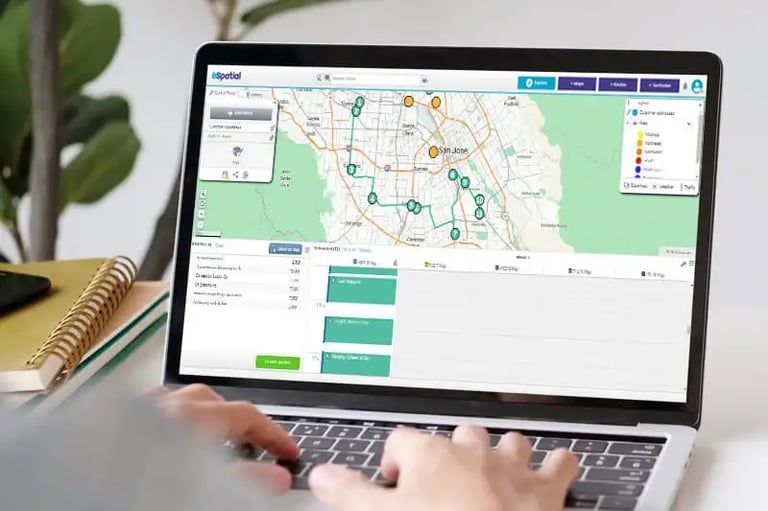

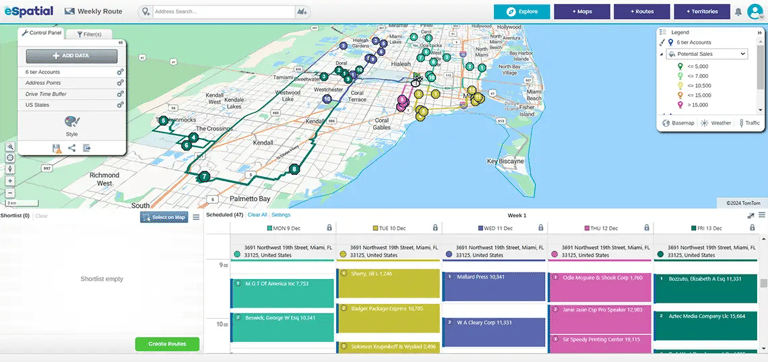
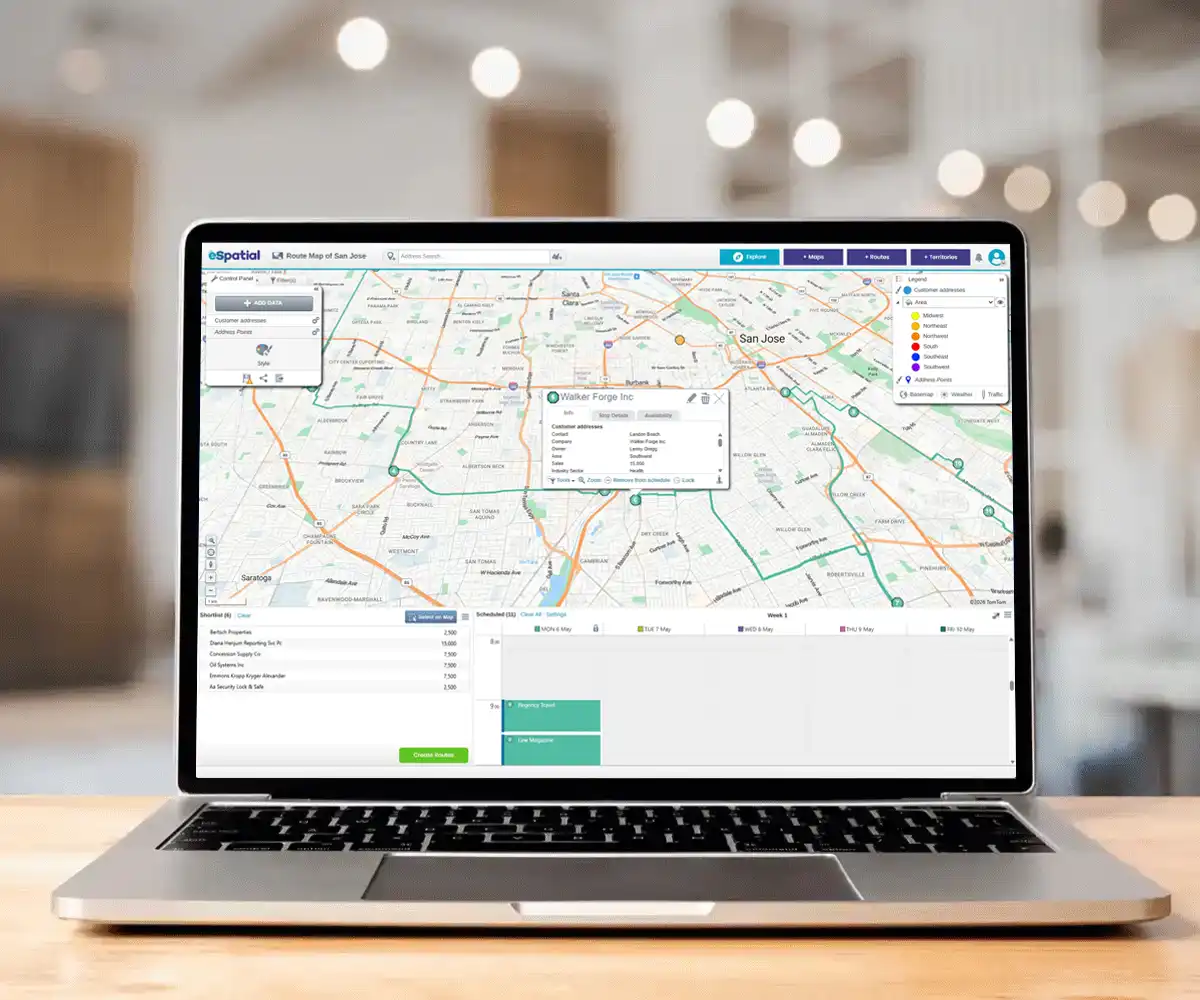
Route planner on a laptop
Route schedule for a week

Your field team does not need an aggressive win-rate jump to generate exceptional returns.

Consider a 20-rep team generating $10,000,000 in baseline annual revenue. If multi-stop route optimization delivers just a modest 3% efficiency gain in qualified field appointments, that slight shift yields $300,000 in incremental revenue.

Measured against a $10,000 annual platform investment, a 3% lift delivers a 2,400% ROI (25x return). Route optimization transforms from a minor administrative expense into a high-leverage sales driver.

How Does eSpatial Optimize Complex
Multi-Stop Routes in 6 Steps?


eSpatial simplifies multi-stop route optimization through a guided six-step process: importing account data via Salesforce sync or CSV/Excel, configuring travel constraints, running the Recommendations Engine, selecting target stops via visual tools, locking fixed appointments, and generating an automated, color-coded schedule.

1
Step 1

How Do You Upload Customer Data into eSpatial?

Bring customer records into eSpatial by syncing directly with Salesforce CRM via a bidirectional link, or by importing data via Excel or CSV spreadsheets. The system automatically geocodes and validates customer addresses, plotting them as interactive pins across your territory.
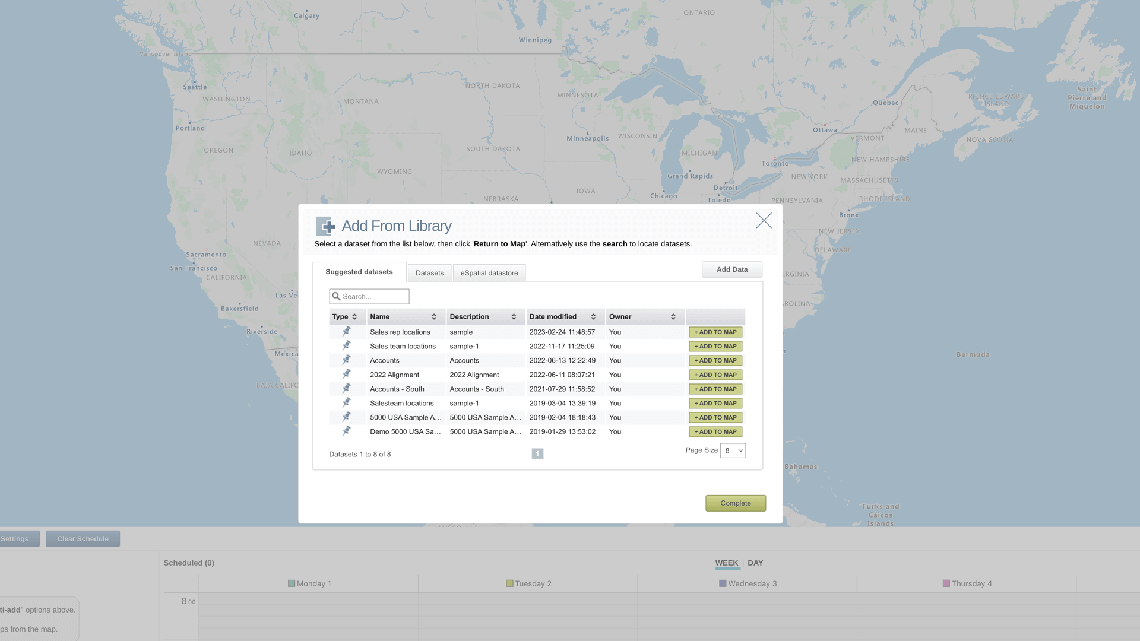
Upload your data
2
Step 2

How Do You Set Custom Travel and Meeting Constraints?

Customize route preferences to match the actual working conditions of your sales force. You can easily define start and end locations, daily working hours, travel days, default meeting durations, and scheduled break times. Setting these parameters ensures that every generated schedule is realistic, compliant, and practical for field reps.
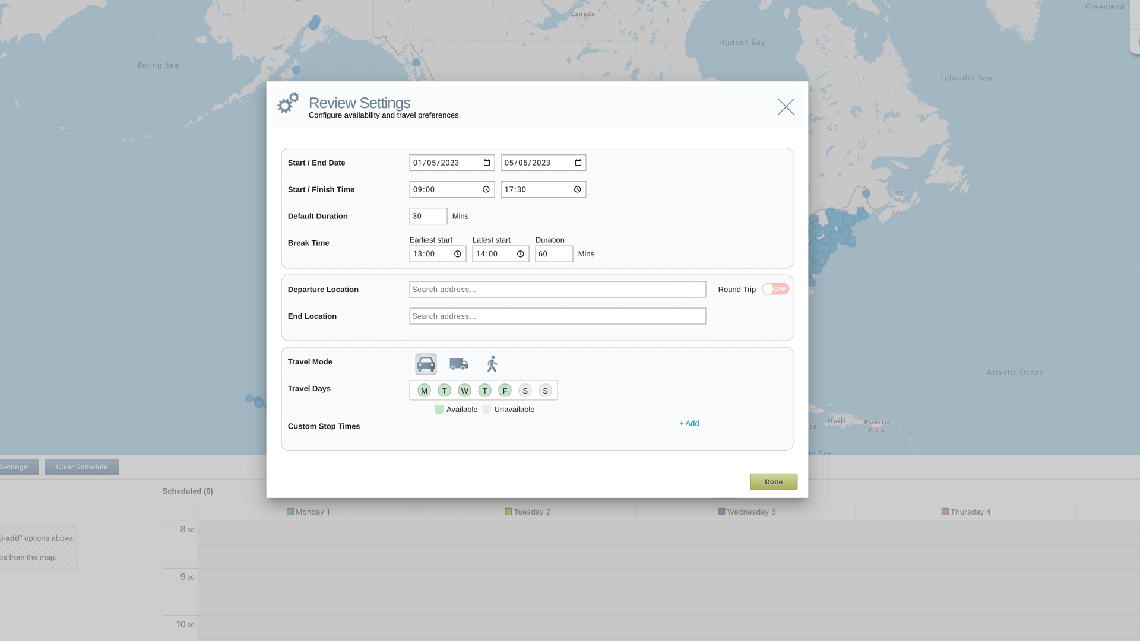
Route planner meeting time
3
Step 3

How Does the eSpatial Recommendations Engine Select Top Accounts?

Leverage eSpatial's powerful Recommendations Engine to surface the best daily stops based on business impact. The engine automatically evaluates customer priority tiers, geographic locations, and time window constraints. It suggests a highly productive call list tailored to drive maximum sales potential.
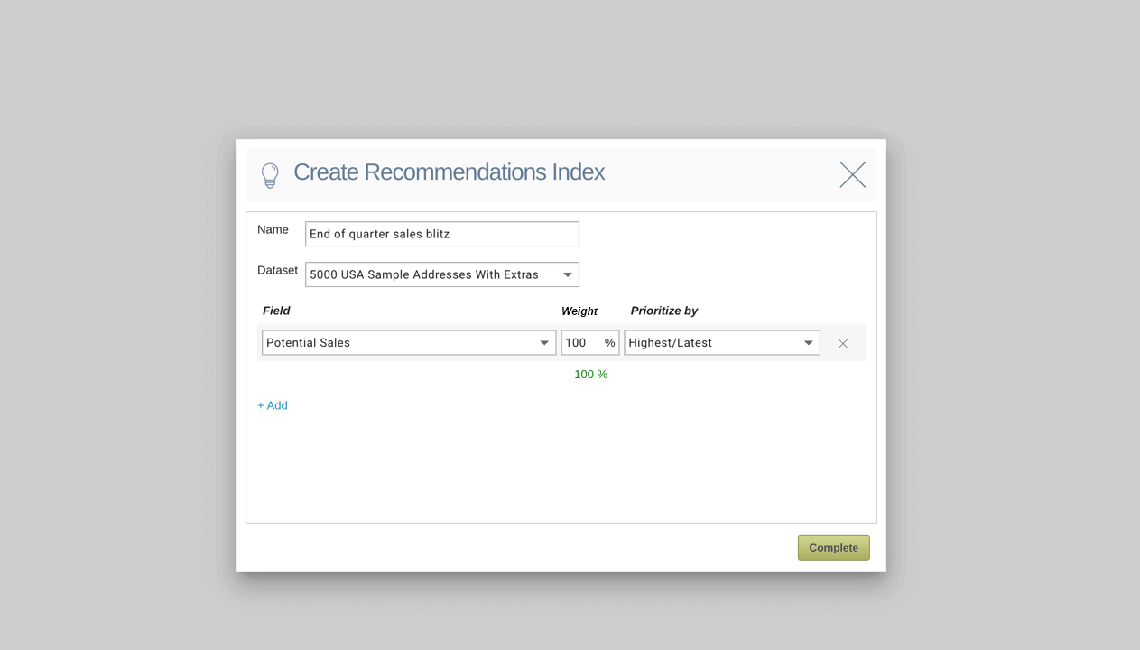
Route planner recommendations
4
Step 4

How Do You Use Multi-Select Mapping Tools to Capture Target Stops?

Select and filter stops directly on the map using intuitive multi-select visual tools. Reps can quickly isolate account clusters or high-priority lead tiers without typing single addresses or scrolling through long spreadsheets. This ensures key accounts are never missed during daily planning.
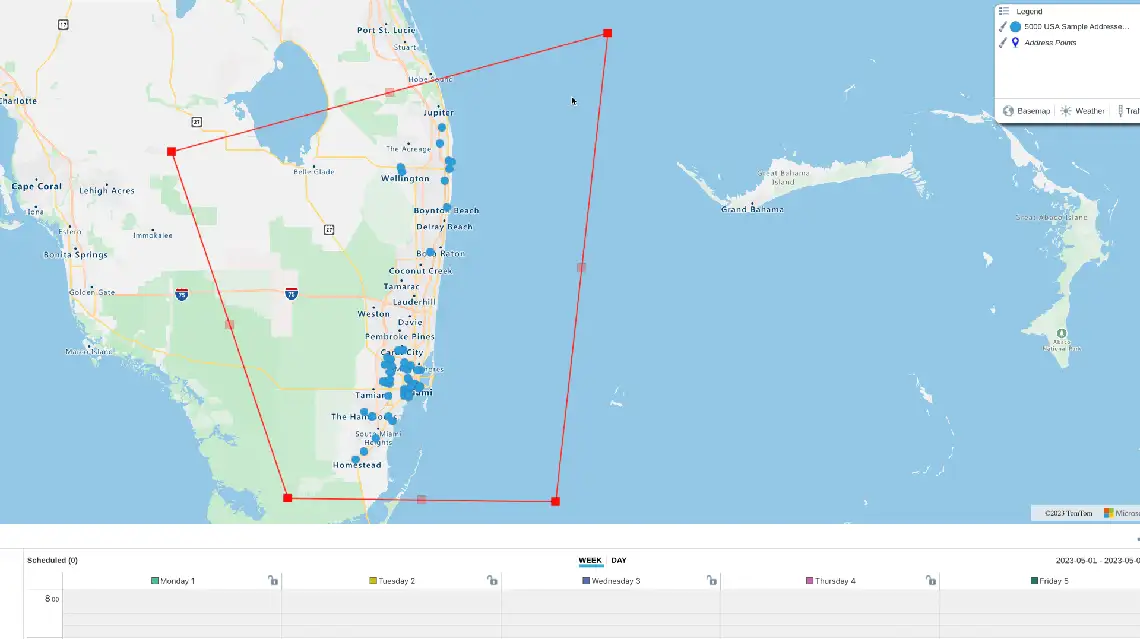
Multi-route planner add stops
5
Step 5

How Do You Lock Critical Fixed Appointments into Your Route?

Lock time-sensitive meetings or firm commitments into your route before running optimization. The system holds these critical appointments at their set times while automatically calculating and sequence-routing all surrounding visits around them.
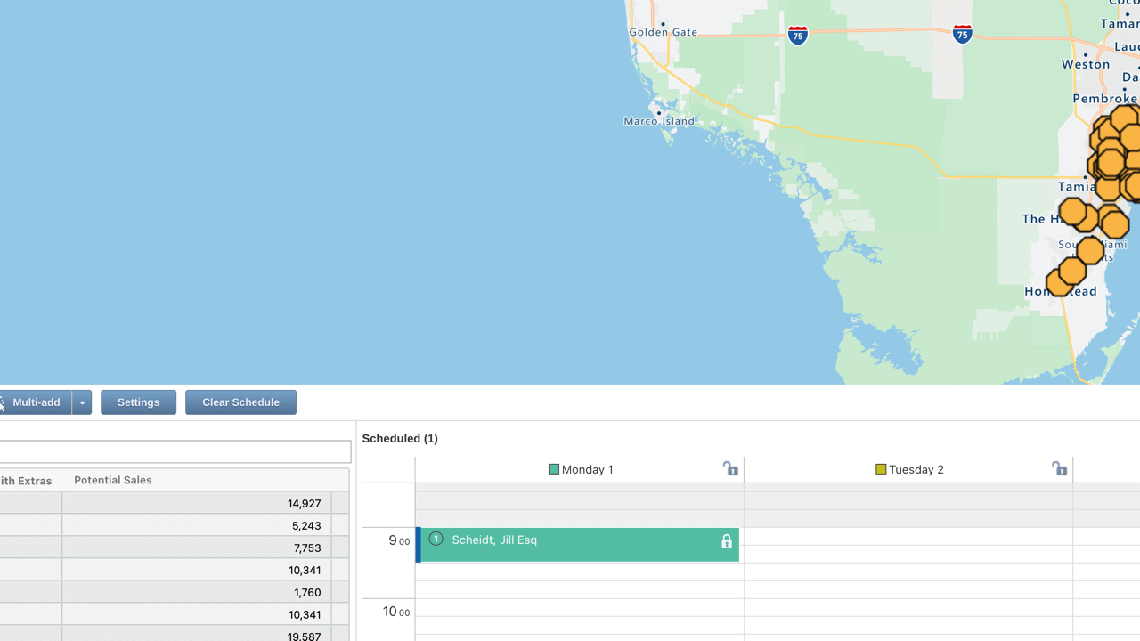
Route planner locked stops optimization
6
Step 6

How Does eSpatial Calculate the Optimal Daily or Weekly Schedule?

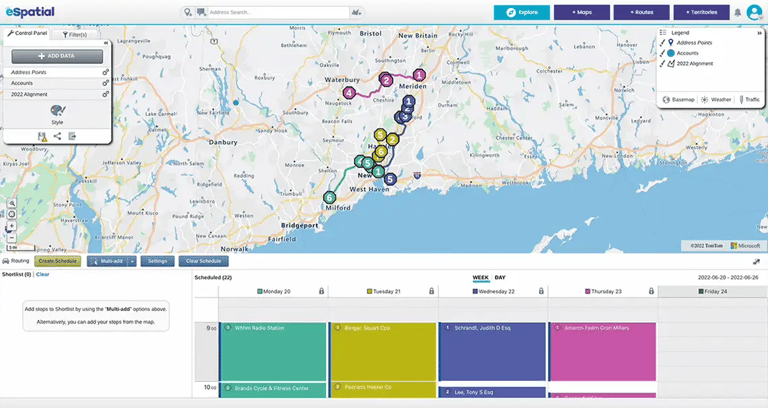
With a single click, eSpatial generates the most efficient path across all selected stops, minimizing travel time and balancing workload distribution. The result is a clear, color-coded daily or weekly schedule ready to sync directly to mobile devices for seamless field execution.
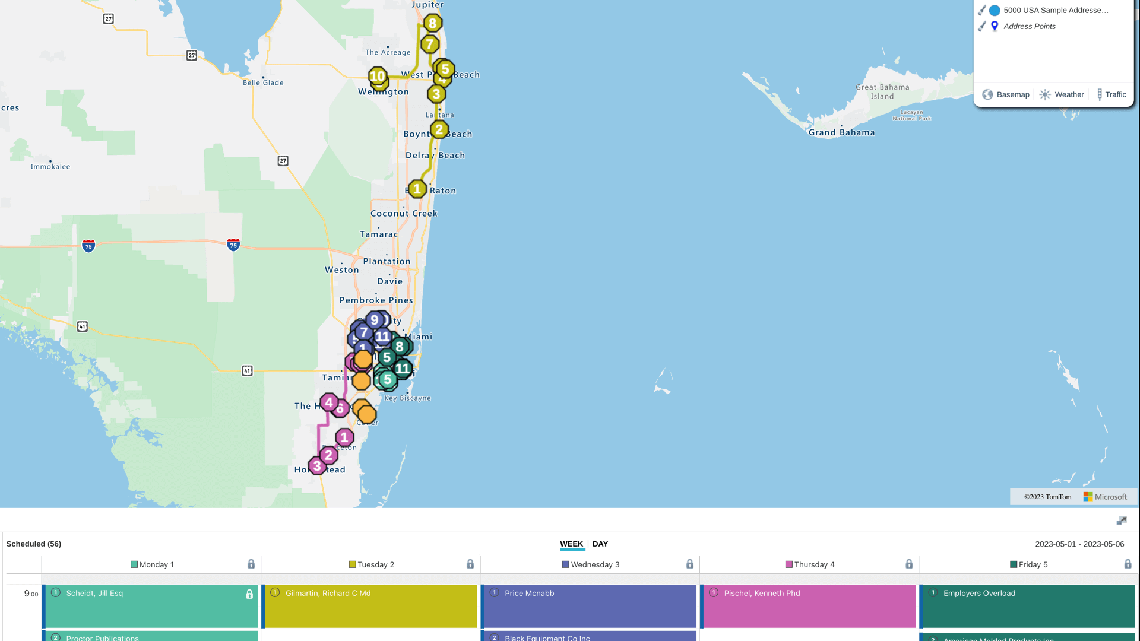
Route planner schedule optimized

What Key Features Should You Demand
in an Enterprise Route Planner?


An enterprise multi-stop route planner must provide dynamic mid-day re-optimization, direct Salesforce CRM synchronization, mobile route management, bulk data import, appointment locking, and customizable visit constraints. These capabilities transform route planning into an automated, revenue-generating field workflow.

Woman driving with route map on her phone
Creating sales route preview

How Does Dynamic Mid-Day Re-Optimization Handle Meeting Cancellations?

On an average field day, traffic delays, meeting overruns, or last-minute cancellations inevitably disrupt fixed schedules. Without dynamic routing software, a canceled appointment results in a 45-minute dead period filled with coffee shop waiting or aimless driving.

eSpatial handles real-world disruptions through dynamic mid-day re-optimization. If a customer cancels or a call runs late, reps can instantly recalculate their remaining route directly from their mobile device.

The system re-sequences remaining visits and surfaces nearby high-priority prospects to fill the open time slot. Instead of wasting time, reps convert canceled meetings into immediate pipeline opportunities and stay on schedule all day.

Team meeting reviewing route map on screen
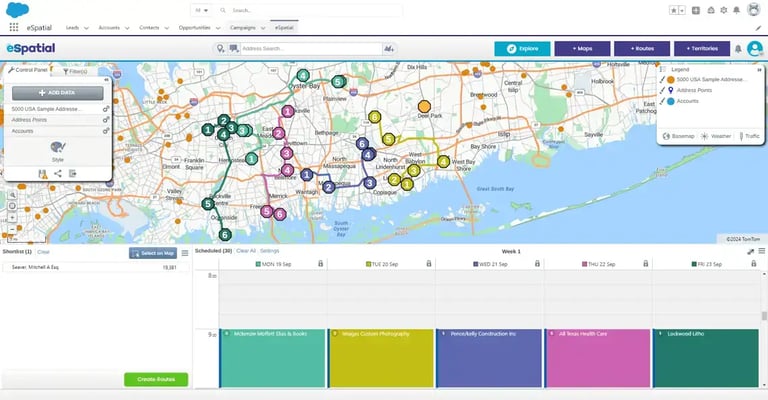
Route map in eSpatial for Salesforce

How Does Mobile Salesforce CRM Integration Prevent Sales Rep Burnout and Turnover?

Field sales reps experience high burnout rates when forced to spend late nights manually copying meeting notes, updated contact details, and visit logs into a CRM. Replacing a single field rep costs roughly $115,000 in recruitment, onboarding, and lost territory momentum.

Eliminate post-visit administrative burden through mobile accessibility and direct bidirectional synchronization with Salesforce CRM. Reps can view past order history, key contacts, and account details right from the map before walking into a meeting.

After the call, reps complete fast check-ins and log visit notes directly from their phone. By syncing seamlessly with Salesforce, eSpatial eliminates end-of-day administrative work, protects rep selling time, and improves retention.

Upgrade Your Field Sales
Team with eSpatial Today


Get started today and see firsthand how our multi-stop route planner drives efficiency and sales performance. Schedule a call with a mapping expert to explore the full potential of our route planner with multiple-stop features.

Frequently Asked Questions


Unlike basic consumer tools that cap routes at 10 destinations, eSpatial supports multi-stop route planning across large numbers of customer accounts without stop ceilings. You can optimize complex daily itineraries or multi-day weekly schedules based on travel preferences and customer priority.

eSpatial features a direct bidirectional sync with Salesforce CRM. Sales reps can display customer locations, account tiers, and order histories directly on interactive maps. Field updates, check-ins, and visit details log back to Salesforce in real time. Data can also be imported via Excel or CSV spreadsheets.

Yes. eSpatial allows you to lock time-sensitive meetings into your route prior to optimization. The optimization engine keeps those appointments fixed at their assigned times and calculates the most efficient route for all surrounding visits around them.

If a client cancels or an appointment finishes early, reps can re-optimize their schedule directly on their mobile device. eSpatial recalculates the remaining path and uses its Recommendations Engine to surface nearby high-priority accounts to fill the gap

You can customize working hours, daily start/end locations, travel days, default meeting durations, and break times. These settings ensure that optimized routes remain practical and aligned with your team's real-world working conditions.

You appear to be offline at the moment, this notice will disappear once your device can connect to the internet again